

What if you need to navigate or simply find your location without the assistance of GPS? A good compass is a common component of go-bags, but there is a bewildering array of options for those who simply want to cover the basics and be done with it. We like the Suunto A-30 for most people after 37 hours of research, including interviews with experienced field instructors.
As with most survival equipment, the best compass in a survival situation is frequently "the one you have." If you're buying new, this guide will tell you what to look for and what to avoid when it comes to emergency preparedness.
Many individuals will buy a compass, toss it in their bug out bag, and not use it again until a need arises, which may be different from what a devoted enthusiast would care about when selecting a compass for their weekend pastime.
There are numerous add-ons and features available for compasses today, not all of which necessarily make for a better emergency tool. Some features found on military compasses, for example, are great when you need to call in an air strike but can be confusing when you're just trying to find your way around.
The fundamentals:
- Compasses are classified into three types: button, orienteering/baseplate, and military/lensatic.
- The clear baseplate types should be purchased by the majority of people. Buttons are underpowered, while lensatics are overpowered.
-Button compasses can be useful as a low-cost backup, but you give up many of the features that make the difference between "that was easy" and "frustration or failure."
- In the field, cheap compasses frequently fail, leak liquid, and so on. Try not to spend less than $10-15. Most people will spend between $20 and $50.

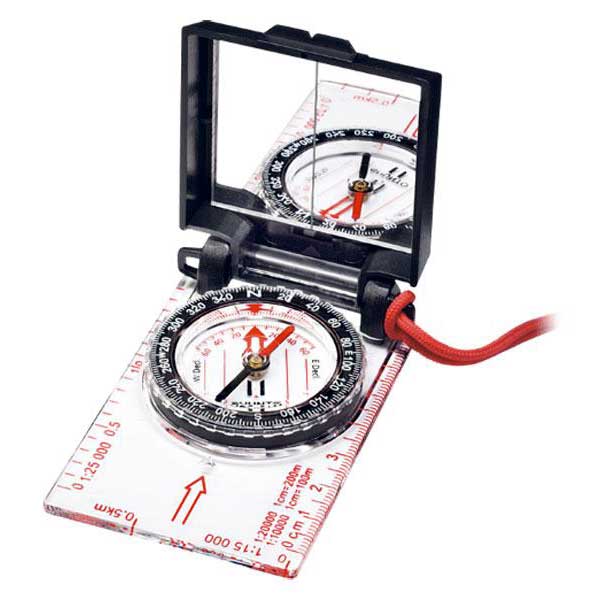
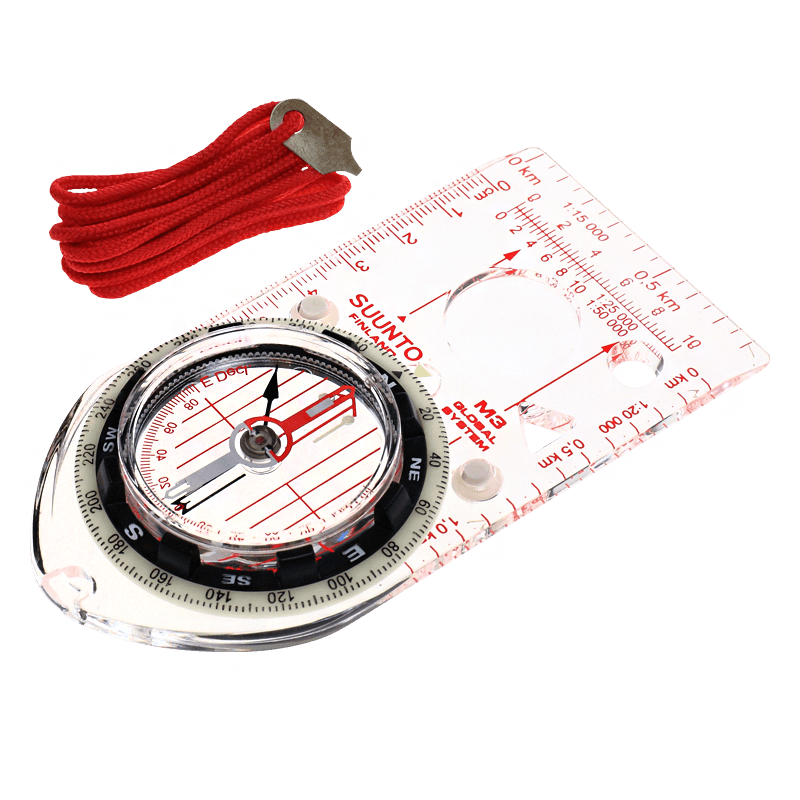
We recommend the Suunto M3-G or Suunto MC-2 if you want to spend a little more for a better compass (around $50-60). Both had illuminated markings (which were usually activated by "charging" it with a flashlight), declination adjustment, and a clinometer (not needed for most people). The MC-2 has the advantage of a mirror, which folds down to cover the compass during storage and can be used for navigating or signaling. The M3-G has a deeper casing and a global needle, making it easier to find North quickly and consistently no matter where you are or how un-level you are. In contrast, the MC-2 is "calibrated for the northern hemisphere."
If you're on a tight budget, a good button compass will suffice. They're also excellent backups in a primary kit or in less-important kits where you don't want to spend too much money (such as your everyday carry).
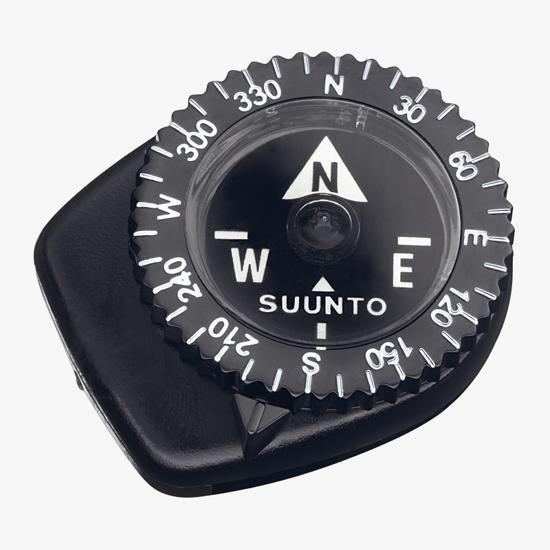
The Suunto Clipper is a 1" x 1" compass stamp that can be clipped (hence the name) to items such as a watch strap, backpack, or the side of a map. If you can't find the Clipper or want to save another $5, the Sun Company Button is another inexpensive backup option that comes embedded on a piece of plastic that can also serve as a straight-edge for use with a map in an emergency.
"People will get into situations where they don't trust their compass for whatever reason," says Reid Tillery, an Army veteran and search and rescue professional in Florida who we interviewed for this review. "Having a second compass allows you to double-check it." If both compasses are pointing in the same direction, you can stop second-guessing and get back to navigating."
Top brands
The compass market is typically divided into a few legitimate and well-known companies and everything else that is cheap and random.
Brunton, made in the United States — popular, but in our experience, they have design and quality issues, which are reflected in generally mediocre customer reviews.
Cammenga, manufactured in the United States, is used by the United States military.
Silva, manufactured in Sweden, or China.
Suunto, manufactured in Finland.
Minimum compass features

While a simple button compass can approximate NSEW, we believe the following features are essential for easy emergency navigation.
- Arrow pointing to the magnetic north. This is the main arrow that everyone is familiar with. It spins in circles to find Magnetic North. The tip is typically red, as used by teachers in the memorable "red in the shed" method.
- Arrows or lines indicating the direction of travel This is a fixed line or arrow located outside the rotating compass compartment. It points in the same direction as the compass's physical front.
- Index line that is stationary. This is a thin line pointing in the same direction as the travel line. It's not spinning, but it's in or near the spinning compartment.
- Bezel ring that rotates. The rotating ring with degree numbers ranging from 0 to 360 that revolves around the Magnetic North seeking arrow.
- Orientation of arrows and lines The rotating bezel ring is built into the face of the compass so that it points to 360 degrees. The orienting arrow and lines will point in any direction you turn the bezel. The "shed" is the space inside the arrow.
- A transparent base plate with a straight edge and a scale. A good compass, whether it folds or not, can lay flat and has a long straight edge for drawing lines and taking measurements on your map. If you already know the scale of the maps in your preparations, you can look for a compass with the same scale (eg. 1:24,000 used on USGS maps).
Comments
Post a Comment