
You're halfway through a multi-day hike. The plan was to follow the trail, but you deviated from it. You're now at a loss. You make an unsuccessful attempt to return to the trail and end up spending the night in the backcountry. You've finished your water and are thirsty by the time you wake up in the morning.
How long can you go without drinking water?
According to the Rule of Threes, the average adult can go three days without water. Tell that to the few hikers who perish each year from dehydration on a day hike. The Rule of Threes is a guideline rather than a hard and fast rule.
In brief, water is among your primary concerns in wilderness survival because you won't be able to survive without it for long. You were probably already aware of this. The simple fact that you require water is the easy part. The difficult part is locating the water.
Consider the following water sources:
Rain

Rainwater is most likely cleaner than any water you'll find on the ground. You won't catch much if you leave your bottle out in the rain or stare up at the sky with your mouth open. Make your own catchment system out of a tarp or leaves, and run the water into your containers.
To fully benefit from rainfall, you may require additional containers. A makeshift container can be made by hollowing out a wooden stump or digging a hole in the ground and lining it with clay. You can even store water in a natural rock depression.
Rivers

river is the most obvious source of water. These are the bodies of water that, if you have one, you would see on a map (and you should).
To reduce the possibility of contamination, choose fast-flowing water at higher elevations and away from human habitation and livestock.
If you see an oil slick on the surface, stay away from the water. Chemicals are not removed by filtering or boiling. Be cautious if there is no green vegetation growing around the water or if animal bones are present, as these are signs of pollution. Also, if there are a lot of mineral deposits along the water's edge, this could indicate an alkaline condition.
Birds & Bees
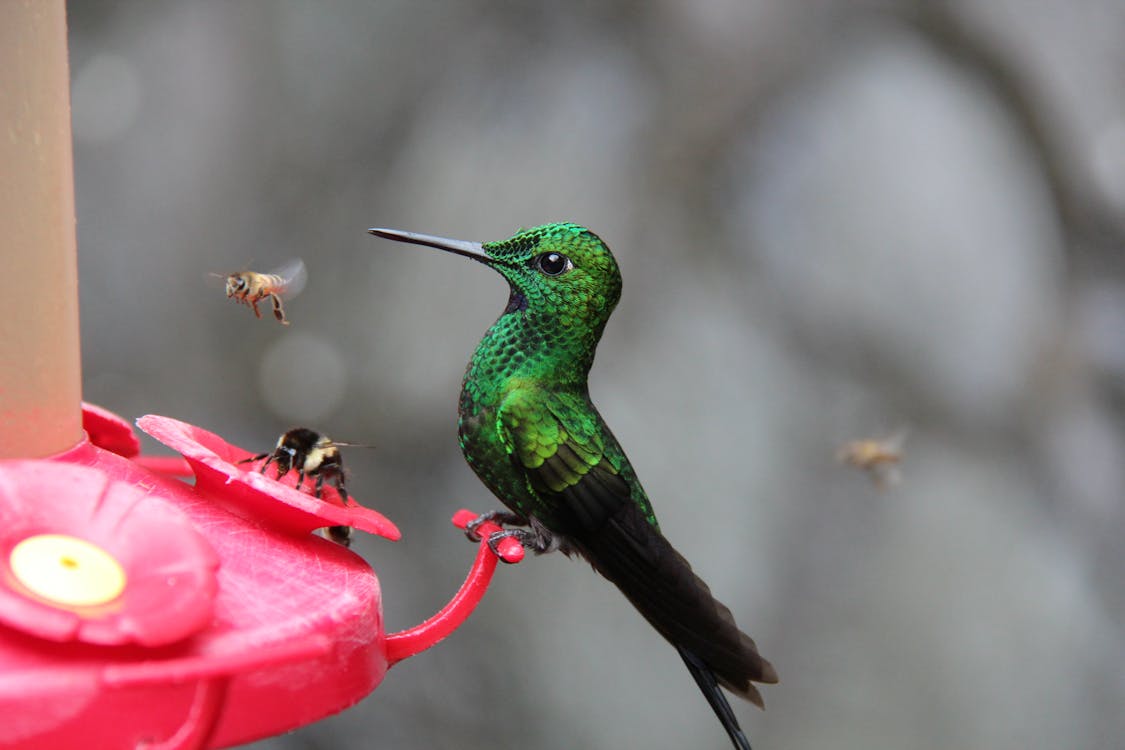
Animals can indicate the presence of a nearby water source. At dawn and dusk, birds and mammals drink. They may lead you to water if you follow them. You are not required to see the animals. Downhill game trails, which frequently lead to water, can be followed.
When birds are on their way to water, they fly low and straight. When they return, they fly from tree to tree, resting frequently. Concentrate on grain-eating birds such as pigeons. Water birds and birds of prey do not drink frequently, making them poor indicators of nearby water.
Meat-eating animals are also poor indicators because they get a lot of moisture from their prey.
Keep an eye out for insects as well. Bees are a sure sign that there is water nearby. Bees typically stay within four miles of the hive, which is always within four miles of water. The majority of flies stay within 100 yards of water. A column of ants ascending a tree is en route to a water-trapped reservoir.
Water from Distillation

There are two simple methods for distilling water in the wilderness. The first method is to boil it in a pot with a cloth covering the top. Wring the cloth out into a container once it has been saturated with clean water from the steam.
The second method is to construct a solar still by digging a hole that will serve as a hot box. Fill it with your most important possessions, place a collection container in the center, and cover it with a plastic sheet (e.g. tarp, poncho). Place a rock in the center of the sheet so that any liquid that condenses beneath it drips into your container.
Keep in mind to leave the cup empty. Inside, clean water will drip. The dirty water, vegetation, and piss are expelled from the cup. You don't want to screw up that part.
Both of these methods are time-consuming, but they are useful to know if you have no other options.
Plants
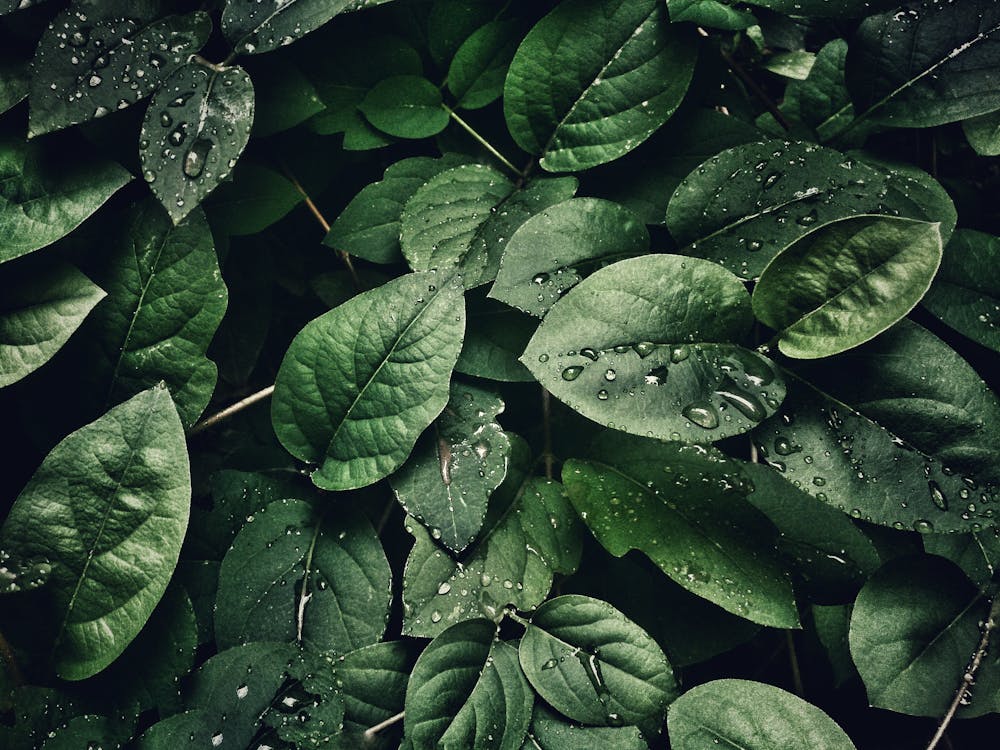
You can eat the pulp of some cacti, such as the fishhook barrel or the prickly pear, or wring the water out of them. Many others, on the other hand, will make you sick.
Bamboo is frequently used to collect clean drinking water.
Water can be extracted from near-surface tree roots by removing the bark and sucking out the moisture. You can also shave it to a pulp and squeeze out the water.
Some palms collect water, which can be drained by bending a flowering stalk downward and cutting the tip. Every 12 hours, the water will be replaced.
Some vines contain water as well. Some, however, are poisonous.
Unless you are familiar with the plant and are confident that it is safe to drink from, it is preferable to extract water from vegetation using a solar still.
Make a Hole
/cloudfront-us-east-1.images.arcpublishing.com/gray/QFLDDLLSCVDC7LPFZGHFDX6TEQ.jpg)
If you dig a deep hole in wet dirt or sand, it will fill up with water over time. Look in the same places you'd look for a puddle — valley bottoms, dry stream beds, and so on. It's also a good idea to look under patches of green vegetation.
Dig above the high water line if you're near the coast to avoid salt water.
Snow

In a cold climate, you can get water by melting ice or snow. To avoid lowering your core temperature, it is preferable to melt it rather than eat it directly. Also, ice is preferable to snow because it provides more water for the same amount of energy used to melt it.
If you don't have a fire to melt the ice, put it in a water bottle and put it under your jacket. It will eventually melt due to your body heat.
Choose older sea ice with a low salt content if you need to melt it for water. It'll be blue with rounded edges.
Comments
Post a Comment